


Cultured: Paul Tazewell and Cynthia Erivo Give Us an Exclusive Look Inside the ‘Wicked’ Dressing Room
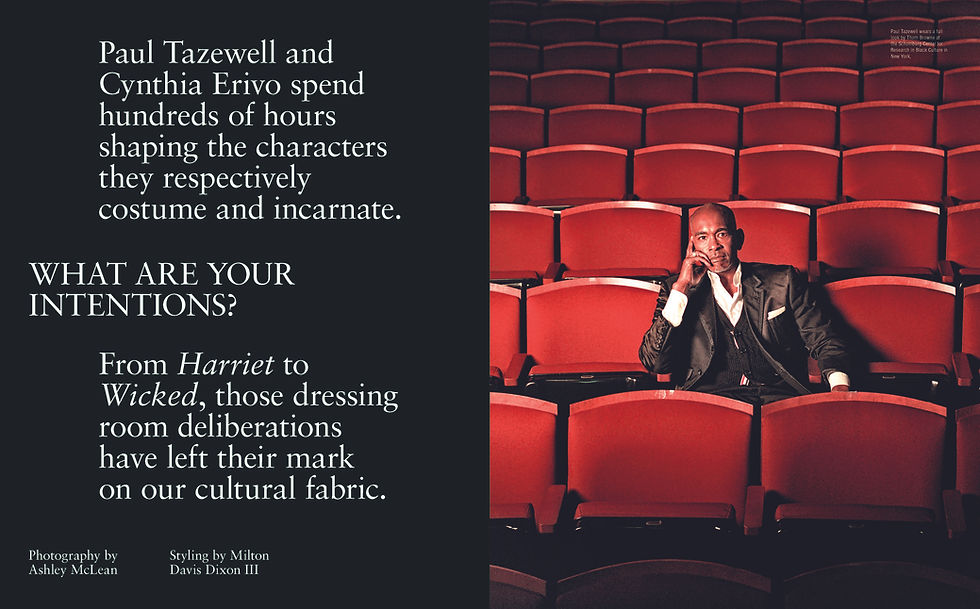
“This is everything,” Paul Tazewell told the audience as he held his Oscar aloft at Los Angeles’s Dolby Theatre earlier this year. In the crowd, the muses he has dressed, from Ariana Grande to Rachel Zegler, rose to give him a standing ovation. That night, the Akron, Ohio, native became the first Black man to win the award for Best Costume Design for his work on Wicked.
Voluminous tailoring aside, Tazewell’s trademark is his collaborative bent—bringing silver screen A-listers and aspiring theater actors alike into the dressing room for long and winding conversations about character direction. “How do you see this role?” and “What are your intentions?” are just two of the queries that have yielded some of this century’s most indelible costumes. There was his Lin-Manuel Miranda one-two punch with 2008’s In the Heights and the culture-shifting 2015 run of Hamilton. A turn at the Metropolitan Opera with Terence Blanchard’s Fire Shut Up in My Bones, based on the memoir of former New York Times op-ed columnist Charles M. Blow. And of course the worldwide phenomenon that is the Wicked franchise. Two short months after his Academy Award win, Tazewell stepped out at the Met Gala to showcase his collaboration with Thom Browne for carpet mainstay Janelle Monáe. “This collaboration is just the beginning,” he noted. “More to come.”
Read the full story here: https://www.culturedmag.com/article/2025/11/21/culture-wicked-paul-tazewell-cynthia-erivo-interview/
It was on the set of 2019’s Harriet, where she starred as abolitionist Harriet Tubman, that the designer first met his now-frequent co-conspirator, Cynthia Erivo, who chronicles her life onscreen in her new memoir Simply More. They found themselves side by side again when Erivo was cast as the all-green Witch of the West, Elphaba, in 2024’s Wicked. Before they reunited for the release of Wicked: For Good, the pair sat down to discuss how what happens in the dressing room—existential questions, scrapped ideas, and reality checks—lays the foundation for everything we see on screen and stage.


Comments